
What the latest research reveals about regenerative practices
This week’s research examines how environmental systems become visible through the connections they sustain: plastics move through the atmosphere, pollinators shape nutrition and income, farm practices depend on policy design, and biodiversity data require shared institutional infrastructure.
Together, these studies show that ecological challenges are rarely isolated. Microplastics may influence climate dynamics; pollinators directly support rural diets and livelihoods; regenerative agriculture depends on farmer incentives and practical adoption pathways; and biodiversity protection increasingly relies on trusted data commons that connect scientists, policymakers, and communities.
Read on for this week’s research highlights:
-
Plastic climate feedback: Airborne microplastics may affect radiative balance and atmospheric processes.
-
Pollination lifelines: Pollinators sustain income, nutrition, and food security in vulnerable farming communities.
-
Regenerative adoption gap: Scaling regenerative livestock and grassland practices depends on trusted, practical, and economically viable policy support.
-
Biodiversity data commons: European data infrastructures show how conservation depends on collaborative knowledge systems, not just better datasets.
Plastic Climate Feedback
The piece situates plastics alongside other short-lived climate pollutants such as black carbon, highlighting how microplastics can scatter and absorb solar radiation depending on their size, composition, and atmospheric distribution. This reframes plastic pollution not only as a waste or biodiversity crisis, but increasingly as part of the climate system itself. The article also points to major uncertainties around how these particles travel globally, accumulate in the atmosphere, and interact with clouds, aerosols, and warming dynamics.
More broadly, the commentary underscores the interconnectedness of pollution and climate governance. Plastics are presented not as an isolated environmental issue, but as embedded within fossil-fuel production systems, atmospheric chemistry, and planetary-scale feedback loops — expanding the case for integrated approaches to pollution and climate policy.
Read more: Small plastics with large warming potential (Nature Climate Change) [paywall]
Pollination Lifelines
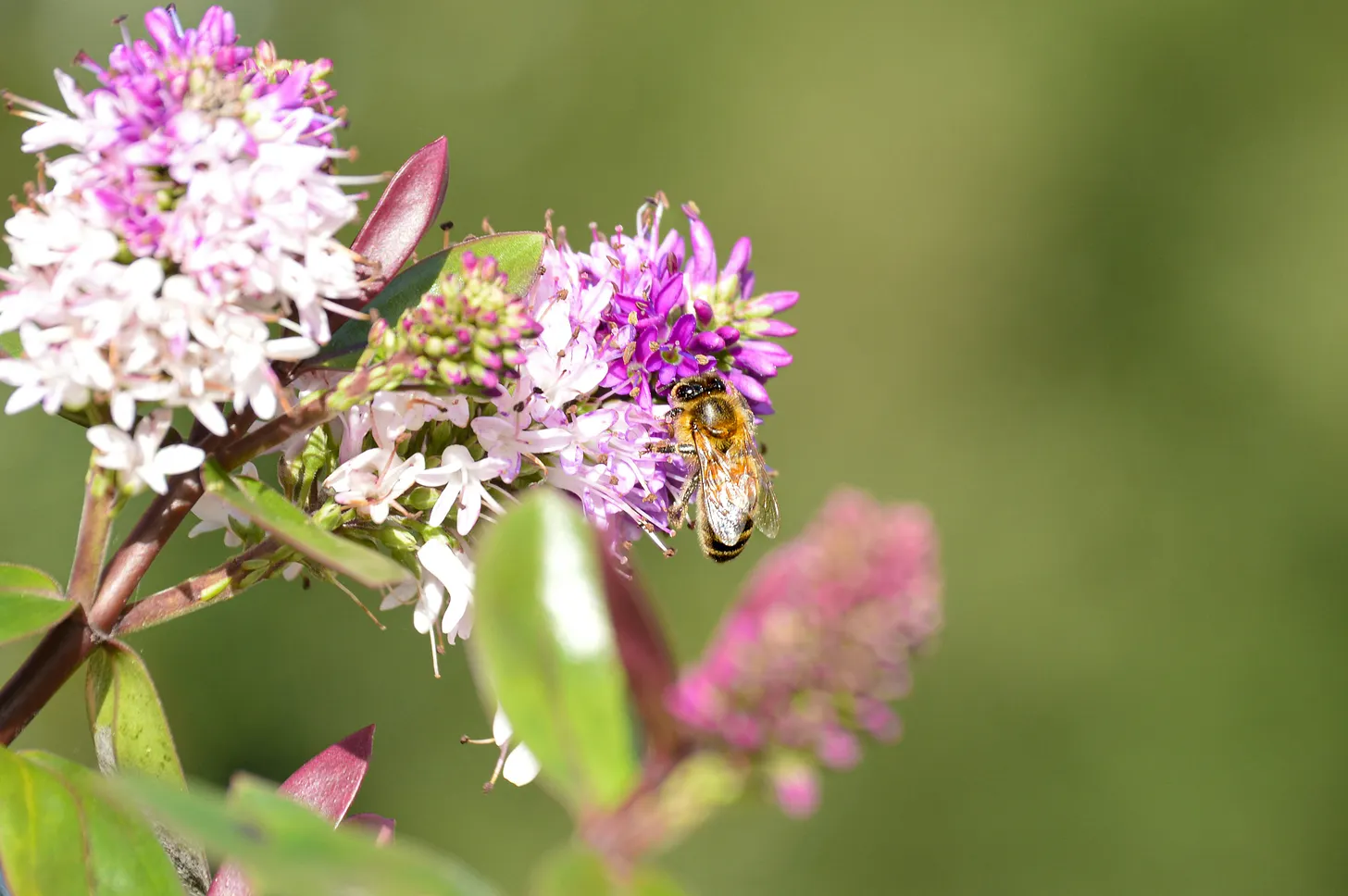
The study makes ecosystem services tangible by tracing a clear chain from insects to crops to human welfare. Pollinator decline is projected to deepen poverty and micronutrient deficiencies, especially among already vulnerable groups such as children and adolescent girls. Yet the findings also show a practical opportunity: supporting native honeybees, bumblebees, hoverflies, and the wild plants that sustain them could improve crop yields, household income, and dietary adequacy.
More broadly, the article reframes biodiversity not as a distant conservation concern, but as a direct foundation for food security, public health, and rural livelihoods. It calls for integrated approaches that treat pollination management as part of nutrition, agriculture, and poverty-reduction strategies.
Read more: Pollinators support the nutrition and income of vulnerable communities (Nature)
Regenerative Adoption Gap
The findings show that farmers are most receptive to measures that align with existing production systems, especially soil health, breeding, and grassland productivity practices. Biodiversity-focused interventions are often seen as less immediately applicable, while financial, managerial, and operational constraints explain why some farmers stop using certain measures. The report also highlights that adoption is not simply measure-by-measure: some practices work better together, and payment schemes that ignore these synergies may be less efficient.
More broadly, the report frames regenerative transition as a policy design challenge. Farmers want payment levels that reflect on-farm realities, simpler application processes, and long-term scheme certainty—suggesting that scaling regenerative agriculture depends not only on ecological ambition, but on practical, trusted, and economically viable support systems.
Read more: Adoption of sustainable and regenerative farming measures in Scotland with a focus on livestock and grassland management (SRUC)
Biodiversity Data Commons
The article highlights eight key dimensions for successful biodiversity data infrastructures, including stakeholder engagement, interoperability standards, legal guidance, training, governance, and long-term maintenance. It emphasizes that biodiversity data are not only technically complex but socially embedded, requiring trust, incentives, and cooperation across researchers, governments, museums, citizen scientists, NGOs, and even private companies. Principles such as FAIR (Findable, Accessible, Interoperable, Reusable), CARE, and TRUST are positioned as foundational for building credible and sustainable data-sharing systems.
More broadly, the piece reframes biodiversity infrastructure as a form of ecosystem governance. Data infrastructures are presented not simply as repositories, but as collaborative “knowledge commons” that shape conservation policy, scientific coordination, and global biodiversity monitoring. The article ultimately argues that addressing biodiversity loss requires not only better ecological science, but stronger institutional architectures for sharing, curating, and mobilizing knowledge across scales.
Read more: Experiences from national biodiversity data infrastructures in Europe: advancing data integration and community engagement (BioScience)