
As ESG expectations rise globally, organizations continue to face a fundamental challenge: How can sustainability become part of everyday work rather than a compliance-driven task?
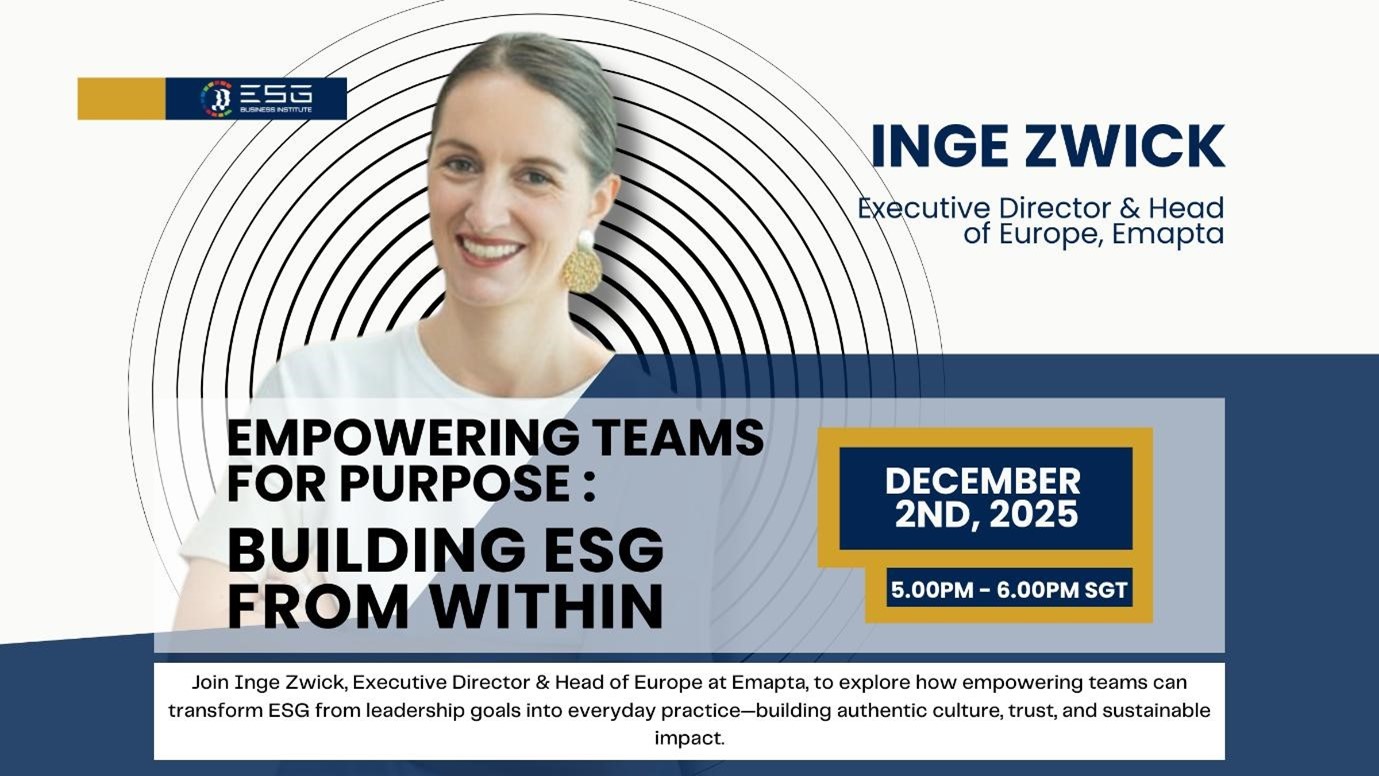
This question guided the ESG Business Institute’s recent webinar, Empowering Teams for Purpose: Building ESG from Within, featuring Inge Zwick, Executive Director & Head of Europe at Emapta. The session offered a clear, practical look at what genuine, people-driven ESG transformation can look like inside an organization.
ESG That Starts With People, Not Policies
Rather than imposing top-down mandates, Emapta began its ESG journey by observing what teams were already doing. HR, IT, Facilities, Recruitment, and Operations had long been contributing to ESG outcomes without formally labeling them as such. This bottom-up approach helped to:
- reduce resistance to ESG initiatives
- strengthen employees’ sense of purpose
- uncover impactful work that had gone unnoticed
These existing strengths ultimately supported Emapta’s successful B Corp Certification in 2024.
As Inge noted, “We didn’t force ESG onto teams. We showed them the value of what they were already doing—and that created real momentum.”
The Social Impact at Emapta’s Core
With over 10,000 employees in seven countries, the social dimension naturally shapes Emapta’s identity. Their people-first model includes:
- above-market compensation and private healthcare
- continuous learning through Emapta Academy
- a strong gender balance in staff and leadership
- wellbeing programs, employee clubs, and community outreach
- the RISE Program for people with disabilities
These initiatives are woven into daily operations—not treated as stand-alone ESG projects.
Environmental Responsibility Through Practical Action
As a fast-growing outsourcing provider, Emapta’s environmental footprint is tied to its offices, data centers, and remote-work equipment. The company focused on achievable, practical steps led by the Facilities and IT teams. One standout example is the energy-efficiency pilot in Manila, which delivered 24% energy savings and now guides future office planning.
While their carbon accounting is still expanding, the commitment to transparency and continued improvement remains central.
Governance as the Foundation of Trust
Though less visible, governance is critical to Emapta’s business model, especially given the sensitive nature of client data handled across global teams. The company maintains:
- ISO 27001 and 27701 certifications
- detailed process documentation
- robust data privacy and security measures
- transparent, ethical employment practices
These structures enable Emapta to scale responsibly while maintaining the trust of clients and employees.
Small Habits, Big Culture Shift
One of Inge’s key reminders was that ESG doesn’t have to begin with major transformations. Small, consistent habits—like employees bringing reusable cups—can gradually shift mindsets and build a culture where sustainability feels natural and meaningful.
A Discussion Rich With Practical Insights
Participants from across regions raised thoughtful questions, from carbon sequestration to inclusive recruitment, reinforcing the growing interest in actionable ESG strategies. For organizations seeking an authentic, people-centered approach to sustainability, this session offered valuable direction and inspiration.
Want to dive deeper? Sign up as an ESG Business Institute Member to view the full recording of this webinar and gain access to more exclusive insights.