

Introduction: A Market at a Turning Point
Global carbon markets were designed to put a price on pollution and channel capital toward climate solutions. Yet in 2026, both voluntary and compliance markets are facing heightened scrutiny. Questions over environmental integrity, price volatility, and regulatory uncertainty have shaken confidence among investors, corporates, and policymakers alike.
BlackSummit – Carbon Market News Roundup and Global Carbon Recent market insights from Fund – Carbon Credit Market Turning Point suggest the global carbon ecosystem is entering a decisive phase marked by both reform and risk.Carbon markets are no longer niche climate instruments; they are becoming critical financial infrastructure. The question is no longer whether they will exist, but whether they can evolve with credibility and stability.
Global Developments
Voluntary Carbon Markets Under Fire
The voluntary carbon market (VCM) has experienced rapid growth in recent years, with companies purchasing credits to offset residual emissions. However, investigations and academic reviews have raised concerns about the environmental integrity of certain projects particularly avoiding deforestation and some nature-based solutions.
Data from 2024–2025 shows a widening gap between carbon credit issuance and retirements in parts of the voluntary market. While issuances remained strong due to projects coming online, corporate retirements slowed amid scrutiny and reputational risk concerns. This imbalance contributed to oversupply pressures and softer prices across several credit categories.
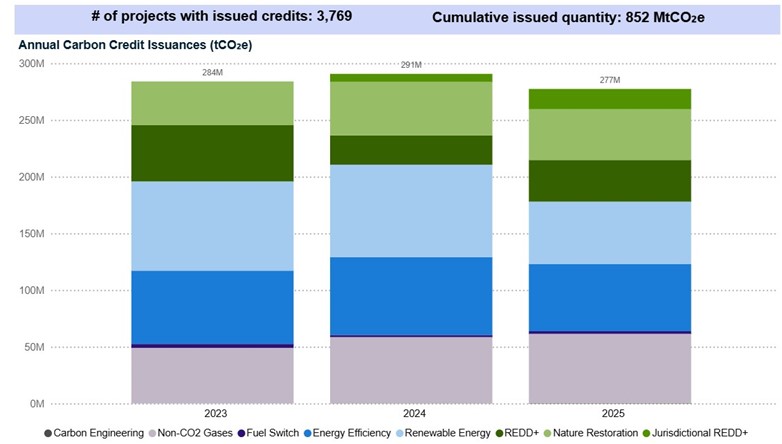
Includes credit transactions from CDM - NDC Eligible, EcoRegistry, Gold Standard, CAR, Verra, ACR, Plan Vivo, ART TREES, Puro Earth, GCC, BioCarbon. Issuances and retirements for additional registries (such as ACCU, JCM and the UK Woodland Carbon Code) are included on the platform for subscribers. Last updated: 17-Feb-26. Source: MSCI Carbon Markets
Includes credit transactions from CDM - NDC Eligible, EcoRegistry, Gold Standard, CAR, Verra, ACR, Plan Vivo, ART TREES, Puro Earth, GCC, BioCarbon. Issuances and retirements for additional registries (such as ACCU, JCM and the UK Woodland Carbon Code) are included on the platform for subscribers. Last updated: 17-Feb-26. Source: MSCI Carbon Markets
Buyers are increasingly differentiating between low-cost avoidance credits and higher-quality carbon removal credits, such as direct air capture and durable storage. The result is a two-tier market: cheaper credits facing credibility questions and premium removal credits commanding higher prices but limited supply.
Compliance Markets: Volatility Across Regions
Compliance markets where emissions trading systems (ETS) are legally mandated have also faced turbulence.
In the European Union Emissions Trading System (EU ETS), allowance prices experienced notable swings between 2024 and 2025. Prices softened amid economic slowdown and lower industrial output but rebounded on expectations of tighter caps under the EU’s Fit for 55 frameworks. Liquidity remained relatively strong compared to voluntary markets, though investor sentiment fluctuated with macroeconomic signals.
In North America, regional systems such as California’s cap-and-trade program saw periodic price pressure tied to political and economic cycles. Meanwhile, Asian markets continue to mature, with regulatory adjustments influencing supply-demand balance.
A significant development came from China, which reintroduced voluntary carbon credit trading alongside its national compliance market. This move aims to provide flexibility for enterprises while stimulating domestic climate finance but also raises questions about standard alignment and quality control.
Key Issues
1. Price Swings and Liquidity Concerns
Price volatility has become a defining feature of carbon markets in 2025–2026.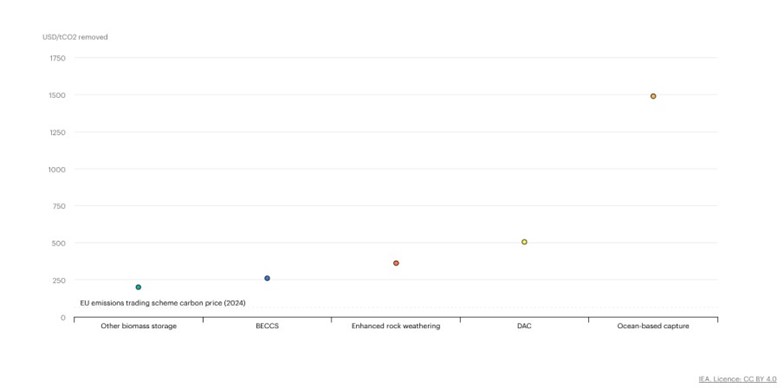
Historical average prices on voluntary carbon markets for selected carbon removal technologies,
2021-2025: https://www.iea.org/data-and-statistics/charts/historical-average-prices-on-voluntarycarbon-markets-for-selected-carbon-removal-technologies-2021-2025
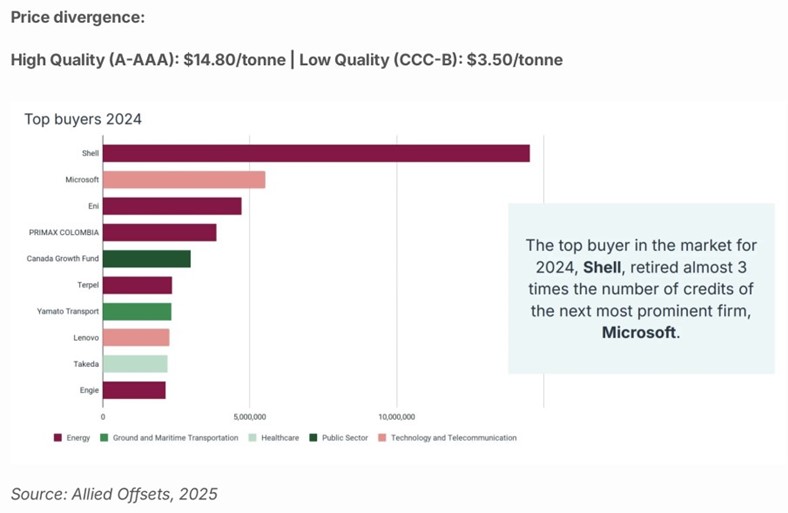
Voluntary Carbon Market Price Divergence Chart: https://www.regreener.earth/blog/voluntary-carbonmarket-update
EU ETS: Prices fluctuated significantly amid shifting economic indicators and policy signals.
Voluntary markets: Prices declined in segments facing oversupply and integrity concerns, while high-quality removal credits maintained relative strength.
Liquidity fragmentation is also emerging as a structural risk. With growing segmentation removals vs. avoidance; nature-based vs. engineered solutions, markets risk losing depth unless standardized benchmarks and transparency improve.
2. Integrity of Carbon Removals
As corporate climate strategies move from “offsetting” to “contribution claims,” the spotlight has shifted to durability and additionality.
Carbon removals, especially technological solutions like direct air capture, are viewed as higher integrity but remain expensive and limited in scale. Nature-based removals face scrutiny over permanence risks, measurement challenges, and potential double counting.
The credibility of carbon markets now hinges on rigorous methodologies, transparent monitoring, and independent verification. Without these safeguards, demand from institutional investors and multinational corporations may remain cautious.
Investor and Regulatory Response
Push for High-Integrity Standards
Market participants are responding with stronger due diligence and demand for recognized standards. Investors increasingly favor credits aligned with emerging integrity frameworks, prioritizing:
- Clear additionality
- Long-term permanence
- Robust monitoring, reporting, and verification (MRV)
- Transparent registries
Financial institutions are also advocating clearer taxonomy alignment and integration with sustainable finance frameworks.
Article 6 Implementation Under the UNFCCC
A pivotal development shaping global carbon markets is the operationalization of Article 6 under the United Nations Framework Convention on Climate Change (UNFCCC).
Article 6 establishes rules for international carbon trading between countries, aiming to prevent double counting and ensure environmental integrity. As implementation mechanisms mature, they may bridge voluntary and compliance markets, enhance transparency, and create a more cohesive global architecture.
However, successful execution depends on political coordination, registry interoperability, and trust among participating nations.
Conclusion: A Crossroads for Carbon Markets
Carbon markets in 2026 stand at a critical juncture. On one side lies fragmentation, credibility erosion, and price instability. On the other hand, an opportunity to mature into transparent, high-integrity financial mechanisms that accelerate global decarbonization.
The coming years will determine whether carbon markets become a cornerstone of climate finance or a cautionary tale of premature scaling without sufficient safeguards.
For policymakers, investors, and corporates alike, the message is clear: integrity is no longer optional. It is the foundation upon which the next phase of carbon markets must be built.